Don’t Fight. Make It Irrelevant.
If you don’t give bad actors what they want to fight over, they can’t fight over it.
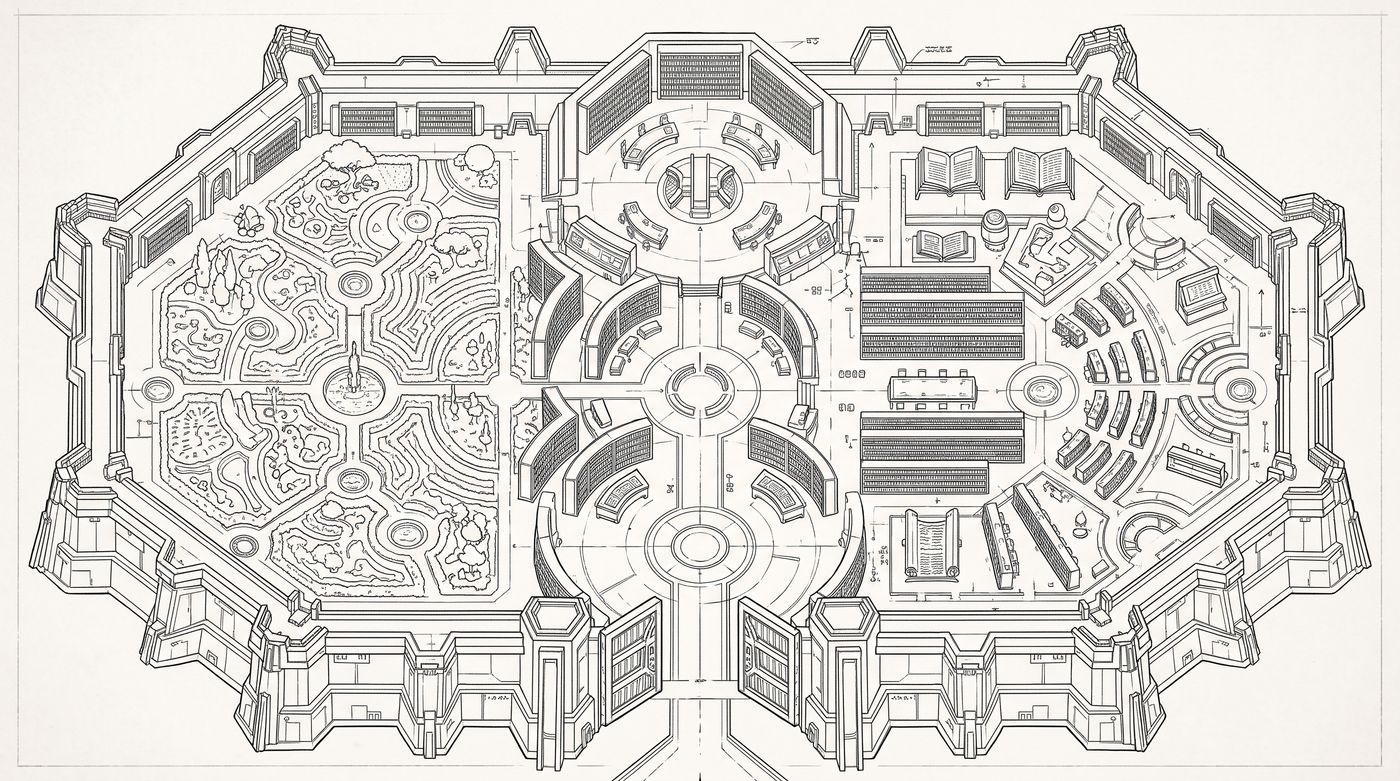
01Defending on the attacker’s ground
Moderation, AI filtering, verification badges and reporting all fight manipulation in the same place: on contested content. That is where the attacker is strongest, because contested content is what attackers care about and what honest people disagree about.
Every defence also becomes a target. A filter that decides what is true is worth capturing, and a badge that signals trust is worth faking. The defender spends effort on the ground the attacker chose.
02The thesis: choose the battlefield
Battlefield selection reverses the order. Leave out the categories where cultures and powers conflict, and keep what almost no one has a reason to attack: practical skills, ecological knowledge, crafts, the sciences of soil and water, community building. The D-SAFE label (opens in a new tab) is that choice, written down: its 11 exclusions are published on the label’s website.
The best defence against manipulation is to remove what manipulators want to fight over.
- Ecological harm
- AI generation
- Explicit content or violence
- Stolen content
- Politics
- Spirituality
- History
- Medicine
- Fiction
- Psychological profiling
- Gambling
03Lineage
Three older ideas sit close to this one.
04Economics of the fortress
A paid membership of $2 (join the club, opens in a new tab) per account makes mass fake accounts costly and funds the commons, so abuse pays for the defence. The claim is modest: it raises the price of an attack and does not prevent one. The attack cost can be tried in the simulator on page 01.
05Objections, stated fairly
A library without history, medicine or spirituality is impoverished.
Whoever decides what is excluded holds power.
“A library that shapes generations has real power, and it needs a way for people to challenge it, or it becomes one person’s canon, however good that person’s intentions.”Gloss, note to Data, 5 November 2026
Choosing not to take sides is itself a position.
Bad actors will just go elsewhere.
06Counterweights: how the fortress stays open
Four mechanisms are meant to keep the exclusion list accountable: public and reversible removals, signed records, forks and appeals. Together they make the core a shared floor and not a ceiling.
07Removing the ammunition
Manipulation needs material: a claim that can swing a vote, move money, divide people or sell a cure. Leave those categories out of the shared core and the material is gone before anyone can fight over it.
Medicine is the clearest case. During the COVID pandemic, vaccines, treatments and public-health policy became contested ground. A library that hosts no medical advice has nothing there to moderate, fact-check or referee. It can still hold what helped people through it: mutual aid, growing food locally, resolving conflict, and creative work during isolation.
- Medicine
- No medical advice, diagnosis or treatment.
- Politics
- No partisan debate or campaigning.
- History
- No disputed or speculative historical narratives.
- Gambling
- No promotion of betting, casino or card games for money, or systems for beating the odds.
The label’s own wording, from the D-SAFE standard package.
08Spiritual neutrality
Religious and spiritual content divides people deeply, and that makes it a target. So the shared core stays neutral. The label’s rule for spirituality is “No religious proselytising.”
Neutral does not mean faith is left out. Communities can build their own extensions on the same infrastructure: a Christian collection, Islamic knowledge resources, a Buddhist curation. Each group gets what it wants, without forcing conflicting worldviews to share one space. Designed · community extensions